
Efficient label creation in SAP
In an interview with Tobias Herrmann (Development), we show how the SSP Label-Forms solution ensures greater transparency and fewer errors thanks to flexible templates and efficient customizing.
In an interview with Tobias Herrmann (Development), we show how the SSP Label-Forms solution ensures greater transparency and fewer errors thanks to flexible templates and efficient customizing.
Tobias: With pleasure. I’m Tobias Hermann and I’ve been working at Softway AG since 2022. Since 2023, I have also been personally responsible for the area of labels with SSP Forms. Apart from that, I work on all kinds of development topics related to forms and our SSP Forms products.
Tobias: One of the biggest problems that users have is the lack of standard software for many areas of application. This forces many to program individual solutions, which takes a considerable amount of time. Even if labels are often created on the basis of existing VDA standards, customer-specific requirements are still necessary. This leads to labels being duplicated or hidden logic being added, which reduces clarity and transparency.
Tobias: It makes administration much more difficult and increases the potential for errors. If there are too many different labels, it’s easy to lose track. This can lead to the wrong labels being used or important information being overlooked.
Tobias: You want to minimize the development effort. You want to save time and costs and at the same time have a user-friendly customizing interface that creates transparency. The labels should be easy and flexible to customize and seamless integration into SAP would be a major advantage.
Tobias: It would be important to be able to easily edit individual fields without violating norms or standards. Good performance and a reduction in the number of labels would also be crucial to increase clarity.

Tobias: SSP Label-Forms offers customized creation of labels according to the modular principle. This guarantees flexibility in the label content and saves unnecessary copies and additional programming. The delivery of ready-made templates saves valuable development time and allows you to start creating labels immediately.
Another advantage is the reduction in the number of labels, which gives you a better overview. Our solution can be used in different applications and modules, which enables standardized label maintenance. Finally, we offer simple multilingual use thanks to our own translation tool. This allows you to benefit from a reusable translation pool, which significantly reduces the translation effort.
Tobias: We have a variety of templates on offer. For example, there is the GS1 label, a standardized label system for the global identification and tracking of products. It contains barcodes, product numbers and expiry dates and enables efficient warehouse management. Our flexible GS1 template works on a modular principle so that it can be adapted to different requirements.
Another important template is the Global Transport Label (GTL), which is designed in accordance with VDA-4994. This label template ensures efficient incoming goods processes and enables packages to be clearly tracked. The structure and content can be controlled through customizing, whereby we can also make individual adjustments if deviations from the VDA standard are necessary.
And don’t forget our type plate template. It is intended for all products and machines that fall under the Machinery Directive. This template ensures clear labeling and can contain information in the form of text, images, barcodes and pictograms. Here too, the structure is customized, which guarantees maximum flexibility.
Stay informed: With practical insights, helpful tips and relevant developments relating to Softway AG, SAP and our output management solutions.
You are currently viewing a placeholder content from Hubspot Embedded Content. To access the actual content, click the button below. Please note that doing so will share data with third-party providers.
More InformationYou are currently viewing a placeholder content from HubSpot. To access the actual content, click the button below. Please note that doing so will share data with third-party providers.
More InformationYou are currently seeing a placeholder content of HubSpot Meetings. To access the actual content, click on the button below. Please note that data will be passed on to third-party providers.
Further information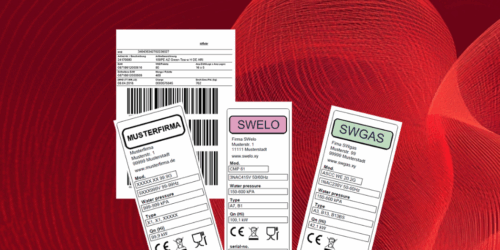




 consultation